
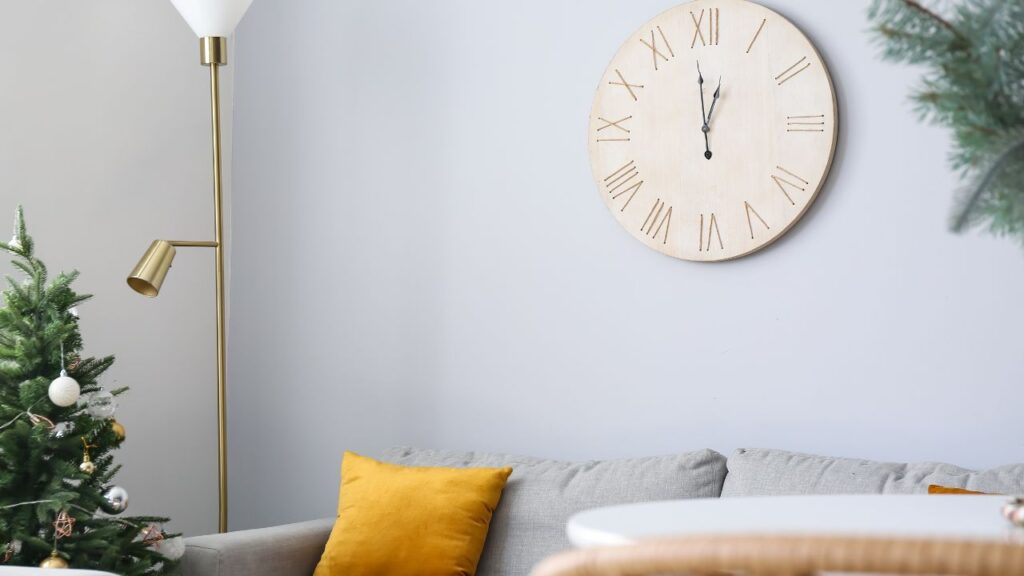
Knowing how to choose the right wall clock for your living room can completely change how your space looks and feels. Most people spend hours picking the perfect sofa or the right paint color, but grab a clock in five minutes without thinking twice. That one rushed decision ends up staring back at them every single day.
A wall clock is not just a time-telling tool. It is one of the few decor pieces your eyes land on over and over again, morning and night. Get it right, and it ties the whole room together. Get it wrong, and it quietly bothers you every time you walk in.
In this guide, I will show you exactly how to choose the right wall clock for your living room in 2026, from picking the right size to nailing the placement. Let’s get into it.
Why the Right Wall Clock Actually Matters

A wall clock for living room decor does two jobs at once. It is functional, and it is visual. When the size, style, or placement is off, the whole room can feel unbalanced.
Think of it like a picture frame. The right one elevates the artwork. The wrong one makes it look cheap. Your wall clock works the same way.
Step 1: Get the Size Right First
Size is the most common mistake people make. I see it all the time. Either the clock is too tiny and gets lost on a big wall, or it is too large and overwhelms everything around it.
Here is a simple rule to follow:
What size wall clock for living room walls works best?
- Small walls or narrow spaces: go for clocks around 25 to 35 cm in diameter
- Medium walls above a console or fireplace: 40 to 60 cm works well
- Large feature walls: 70 cm and above create real visual impact
A good rule of thumb is to choose a clock whose diameter is roughly half the width of your sofa or at least one-third of the wall span. For open-concept living rooms, a 24 to 30-inch clock usually strikes the best balance.
Step 2: Match the Clock Style to Your Decor
Once you have the size sorted, style comes next. This is where things get fun.
You want your wall clock style for home interior to feel like it belongs, not like it was placed there by accident. Here is a quick breakdown:
- Modern and minimalist homes: go for a minimalist wall clock for the living room with clean lines, no numerals, and a neutral color
- Traditional or classic spaces: wooden or metal clocks with Roman numerals work beautifully
- Industrial or loft-style rooms: exposed metal gear clocks or oversized dark-framed clocks are perfect
- Bohemian or eclectic spaces: woven rattan or handcrafted artisan clocks add warmth
In 2026, warm earth tones, matte finishes, and sculptural minimalism are leading the trends. If you want more inspiration on pairing your clock with your interior, check out this guide on the best clock styles for modern home decor to explore styles that work across different room themes.
Step 3: Think About Placement and Height
A great clock in the wrong spot still looks wrong. Wall clock placement tips for the living room matter more than most people realize.
Interior designers recommend hanging your wall clock at eye level, roughly 54 to 60 inches from the floor. If you are placing it above furniture, leave at least 6 to 8 inches of space between the top of the furniture and the bottom of the clock.
The best spots in a living room are:
- Above the sofa on the main accent wall
- Above a fireplace mantel as a bold focal point
- Above a console table to add height and interest
- On a feature wall as a standalone statement piece
Avoid placing your clock in a dark corner or behind a door. You want it easy to read from wherever you sit in the room.
Step 4: Choose the Right Clock Movement
This one surprises a lot of people. The movement inside your clock affects how your room sounds and feels.
Silent wall clocks for the living room use a sweep movement instead of a tick-tock quartz movement. If your living room is a place where you relax, read, or watch TV, a non-ticking wall clock is absolutely the better choice. It keeps the space peaceful without that constant clicking in the background.
Step 5: Set a Budget and Stick to It
You do not need to spend a fortune. There are stunning decorative wall clocks for the living room at every price point. Whether you are shopping for a wall clock for the living room under budget or looking for a designer statement piece, focus on build quality first.
Look for a sturdy frame material like solid wood, metal, or quality resin. Cheap plastic frames tend to look exactly that way on your wall.
Frequently Asked Questions
Q: What is the ideal wall clock size for a living room?
For most living rooms, a clock between 40 to 60 cm in diameter is ideal. For larger feature walls or open-concept spaces, go for 70 cm or bigger. The clock should cover roughly one-third to one-half of the wall width behind it.
Q: Where is the best place to hang a wall clock in the living room?
The most recommended spot is above your sofa or above the fireplace, at eye level, around 54 to 60 inches from the floor. Make sure it is the first thing your eye lands on when you enter the room.
Q: Should a living room wall clock be silent or ticking?
Yes, a silent sweep wall clock is ideal for living rooms. It avoids the tick-tock noise that can be distracting in a quiet, relaxed space.
Q: How do I match a wall clock to my living room decor?
Match the clock’s material, color, and style to your existing furniture. Wood clocks suit warm or traditional rooms, metal clocks work in modern or industrial spaces, and minimalist clocks fit contemporary interiors.
Q: Can I use an oversized wall clock in a small living room?
You can, but be careful. In a small room, an oversized clock can feel suffocating. Stick to medium-sized clocks in the 35 to 50 cm range and make sure the wall has enough breathing room around the clock.

