

Most houseplant enthusiasts abandon the idea of growing a big leaf indoor plant the moment they realize their home lacks bright, sunny windows. That assumption is wrong, and it may be costing you one of the most visually powerful home decor upgrades available.
Studies from the University of Exeter confirm that indoor plants improve concentration by up to 47% and reduce stress significantly, and many of the boldest, most dramatic large leaf houseplants thrive in exactly the dim conditions most homes have.
This guide covers the 10 best big leaf indoor plants specifically selected for low light environments, backed by horticultural data and real-world performance.
Why Big Leaf Plants Work Better in Low Light
Large-leafed species have evolved in dense tropical forest floors where direct sunlight rarely reaches. Their wide leaf surface area is a biological adaptation that allows them to capture as much diffused light as possible. This is why tropical indoor plants with big leaves consistently outperform smaller-leafed varieties in north-facing rooms, hallways, and offices with limited natural light.
Choosing the right low-maintenance large indoor plants for shaded spaces is not just an aesthetic decision. It is a functional one that affects air quality, humidity levels, and the overall wellness of your indoor environment.
Here are the 10 Big Leaf Indoor Plants for Low Light Rooms
1. Monstera Deliciosa
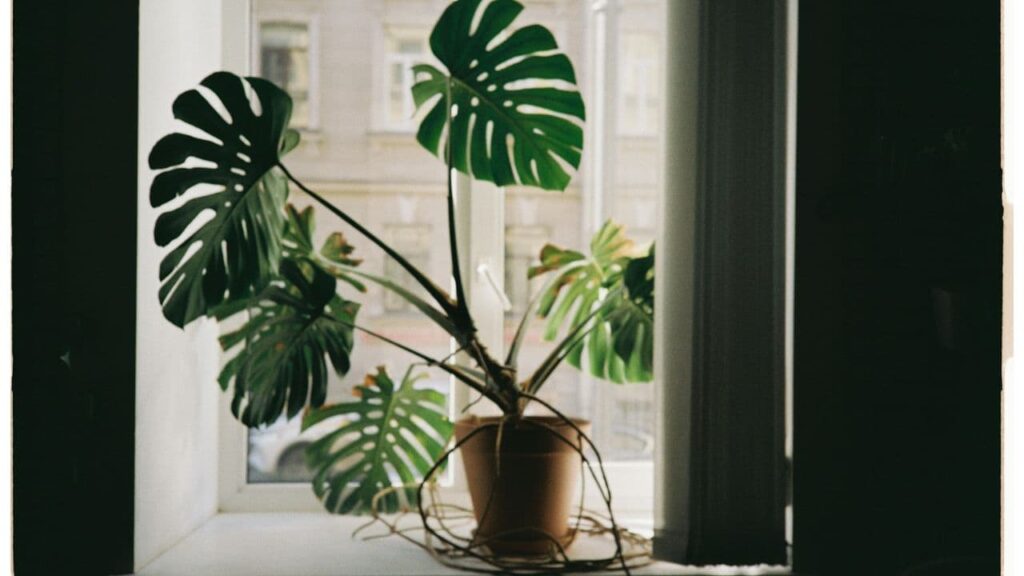
The Monstera deliciosa indoor plant is the most iconic big leaf indoor plant in the world, and performs exceptionally well in indirect or low light. Its fenestrated, split leaves can grow up to 18 inches wide. It tolerates neglect, irregular watering, and shaded corners without losing its dramatic appearance. NASA has listed it among plants that contribute to improving indoor air quality. It is the top choice for anyone seeking statement indoor plants for living room settings.
While big-leafed varieties like Monstera dominate low-light spaces with their wide, dramatic foliage, a thin leaf indoor plant like a Snake Plant or Spider Plant can complement them beautifully in the same room to create visual contrast and depth.
2. Fiddle Leaf Fig (Ficus lyrata)
Fiddle leaf fig care indoors requires consistency rather than bright light. While it prefers stable indirect light, it adapts well to low light once established. Its violin-shaped leaves can reach 18 inches in length, creating an architectural focal point in any room. Avoid frequent repositioning, as this plant is sensitive to environmental changes.
3. Bird of Paradise (Strelitzia reginae)
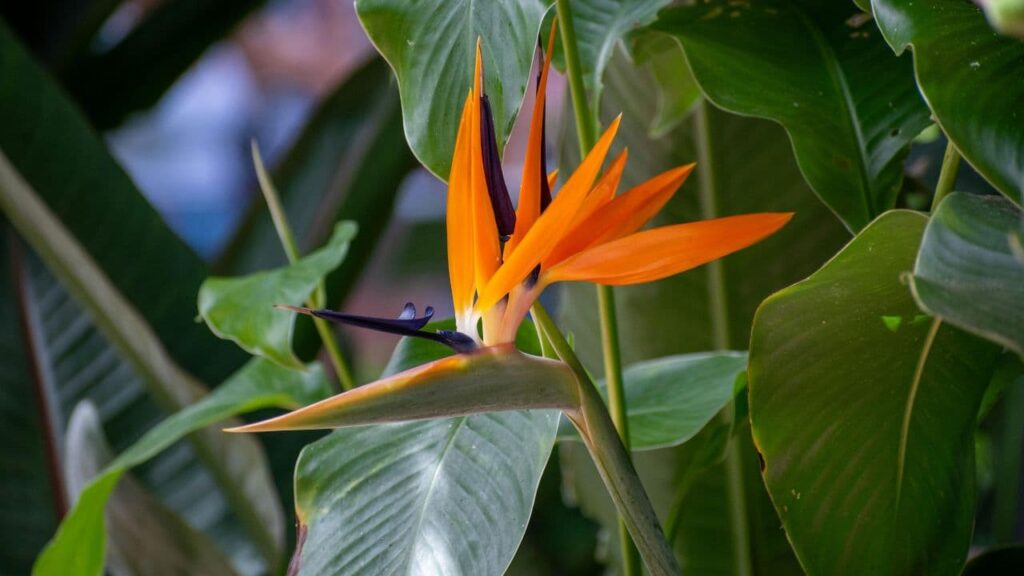
The Bird of Paradise is one of the most sought-after tropical indoor plants with big leaves, with paddle-like foliage that can reach up to three feet in height per leaf. It tolerates low light conditions better than most people assume, growing slowly but steadily in shaded interiors. It is an excellent choice for large leaf houseplants that double as living room centerpieces.
4. Philodendron (Philodendron gloriosum / Philodendron bipinnatifidum)
Philodendron large leaf varieties are among the most forgiving indoor plants with large foliage for low-light spaces. The Philodendron gloriosum features velvety, heart-shaped leaves that can span 24 inches. These plants actively filter airborne toxins and are a strong pick for anyone building a collection of low-maintenance large indoor plants. They grow slowly in low light but remain healthy and visually striking.
5. Elephant Ear Plant (Alocasia / Colocasia)
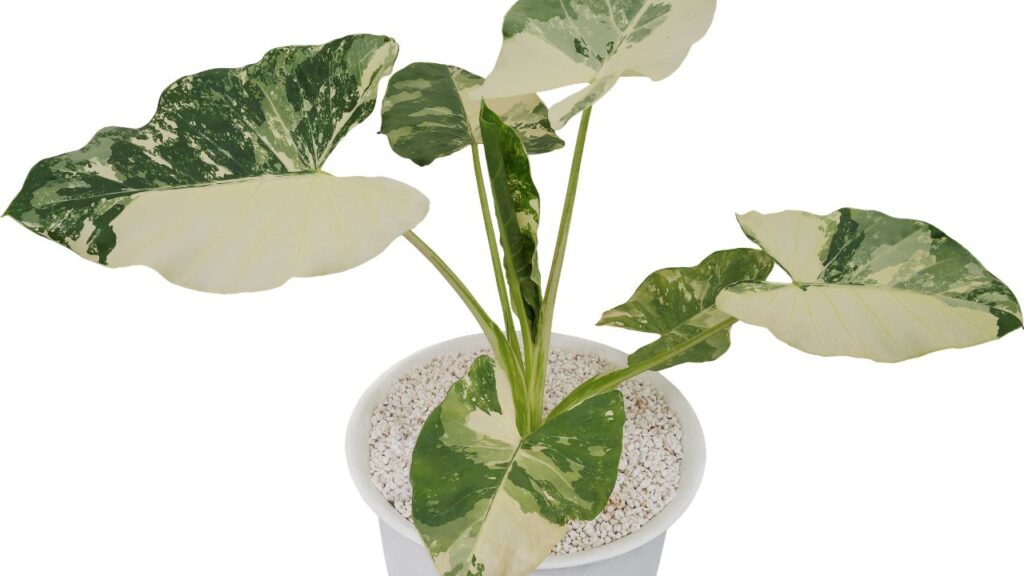
The elephant ear plant indoors brings an unmistakably tropical drama with leaves that can exceed two feet in width. Alocasia varieties like the Alocasia amazonica adapt reasonably well to low indirect light, though growth slows in minimal light conditions. They prefer humidity and consistent moisture, making them ideal for bathrooms or kitchens with low light.
6. Chinese Evergreen (Aglaonema)
The Chinese Evergreen is one of the most scientifically validated big-leaf plants for low-light environments. NASA’s Clean Air Study identified it as an effective remover of benzene and formaldehyde. Its broad, variegated leaves add bold color even in the darkest corners. It is among the easiest indoor plants with large foliage to maintain, tolerating irregular watering and low humidity with ease.
7. Cast Iron Plant (Aspidistra elatior)
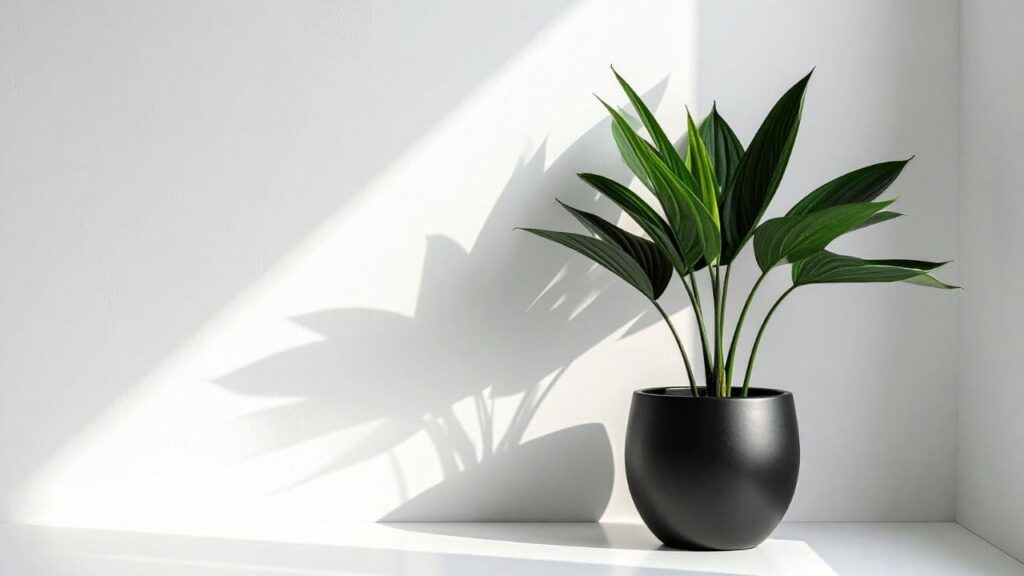
True to its name, the Cast Iron Plant is virtually indestructible. It thrives in deep shade, poor soil, and inconsistent watering, making it one of the most reliable low-maintenance large indoor plants in any collection. Its long, arching, dark green leaves bring a clean, structural elegance to shaded hallways and corners where most plants would fail.
8. Dumb Cane (Dieffenbachia)
Dieffenbachia is a widely recommended big-leaf indoor plant for offices and rooms with fluorescent lighting only. Its large, patterned leaves feature cream and green variegation that visually brightens dark spaces. It grows quickly and tolerates low light well, though it is toxic to pets and children, so placement should be thoughtful.
9. Calathea (Calathea orbifolia / Calathea makoyana)
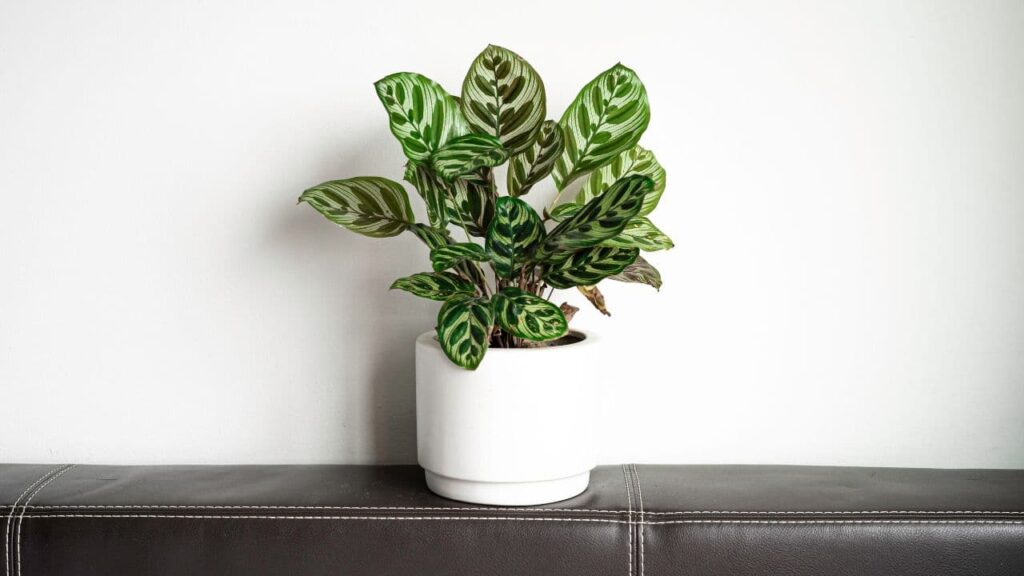
Calathea is one of the most visually intricate tropical indoor plants with big leaves and is specifically adapted to low light as a natural understory plant in South American rainforests. The Calathea orbifolia produces large, round leaves with silver striping that can reach 12 inches in diameter. It also acts as a natural humidifier, releasing moisture into the air. One concern some plant owners raise is excess moisture from plants contributing to surface dampness, so if you are wondering whether indoor plants can cause mold, it is worth reading about proper drainage and airflow practices before placing moisture-loving varieties like Calathea in poorly ventilated rooms.
10. Rubber Plant (Ficus elastica)
The Rubber Plant earns its place on this list not only as one of the best statement indoor plants for living room use, but also as a proven air purifier. Its thick, glossy, burgundy or dark green leaves absorb formaldehyde efficiently. It tolerates low to medium indirect light and grows into an impressive tree-like form over time, making it one of the most rewarding big leaf indoor plants for patient growers.
Placement Tips for Low-Light Big Leaf Plants
Getting the most from your indoor plants with large foliage in low light requires smart placement:
- Position plants within six to ten feet of a north or east-facing window for the best diffused natural light.
- Rotate plants every two to four weeks to ensure even leaf growth and prevent leaning.
- Clean large leaves with a damp cloth monthly so the full leaf surface remains available for light absorption.
- Avoid placing low-maintenance large indoor plants near air conditioning vents, as cold drafts damage tropical species quickly.
Whether you are styling a dim hallway, a north-facing bedroom, or a corporate office with no windows, there is a big leaf indoor plant on this list that will not just survive in your space but genuinely transform it. Start with the Monstera or Chinese Evergreen for near-guaranteed success, then build your collection of statement indoor plants for the living room and beyond as your confidence grows.
Frequently Asked Questions
Which big-leaf indoor plant is best for very dark rooms?
The Cast Iron Plant and Chinese Evergreen are the most tolerant of very low light conditions among all large leaf houseplants. Both have been documented to survive in environments with minimal natural light for extended periods.
Are big leaf indoor plants safe for pets?
Not all are safe. Spider Plants and Calathea are non-toxic, while Dieffenbachia, Philodendron, and Monstera are toxic to cats and dogs. Always verify toxicity before placing a big leaf indoor plant in a home with pets.
How fast do big leaf plants grow in low light?
Growth rate slows considerably in low light compared to bright indirect light. Most tropical indoor plants with big leaves, like Monstera and Bird of Paradise, will produce one to two new leaves per month in optimal low light conditions.
Do large leaf indoor plants need more water?
Not necessarily. Larger leaf surface means more transpiration, but in low light, the soil dries more slowly. Overwatering is the most common mistake with low-maintenance large indoor plants. Always check the top two inches of soil before watering.
Can I grow a fiddle leaf fig in a room with no windows?
Fiddle leaf fig care indoors requires at least some ambient natural or artificial light. In a windowless room, supplement with a full-spectrum grow light placed 12 to 18 inches above the plant for a minimum of eight hours daily.

