

Did you know that over 66% of American households own at least one houseplant? Among the most visually striking choices today, the thin leaf indoor plant has surged in popularity for its elegant, architectural beauty. Whether you are a seasoned plant parent or a curious beginner, growing a thin-leaf indoor plant successfully is entirely achievable with the right knowledge and a little consistency.
Why Choose Thin-Leaf Houseplants
Narrow-leaf indoor plants do more than just look stunning on a shelf. Their linear leaf indoor plant structure creates a bold visual contrast against broader-leaved varieties, making them natural focal points in any room. From grass-like indoor plants like spider plants to feathery houseplants like asparagus ferns, the variety available suits every style and space.
Beyond aesthetics, many of these wispy indoor plants are exceptionally hardy. They adapt well to indoor environments, tolerate occasional neglect, and many actively help purify indoor air. If you want greenery that works as hard as it looks good, architectural houseplants with thin foliage are an outstanding choice.
Choosing the Right Plant
Before diving into care routines, selecting the right species for your environment is critical. Some popular thin-leaf and narrow-leaf indoor plants include:
- Spider plant (Chlorophytum comosum): tolerates low light and irregular watering
- Dracaena marginata: features thread-like foliage with red-edged, sword-shaped leaves
- Ponytail palm (Beaucarnea recurvata): stores water in its trunk, making it drought-tolerant
- Boston fern: a classic fern-like houseplant that thrives in humidity
- Bamboo palm: a delicate leaf houseplant that performs well in indirect light
Understanding what each plant needs before you bring it home saves significant time and effort down the road.
Light Requirements
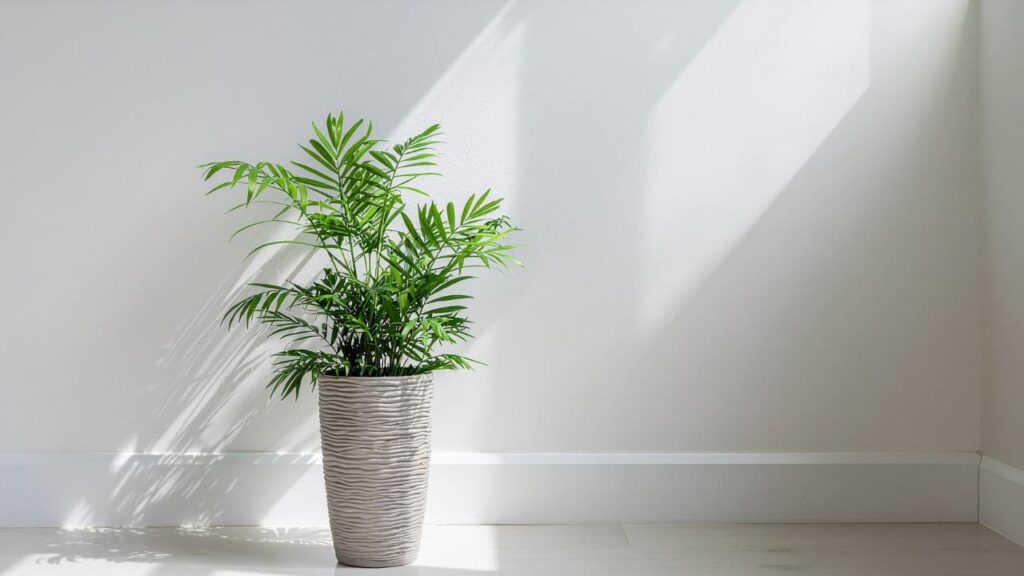
Most long-leaf houseplants and grass-like indoor plants prefer bright, indirect light. Placing them near an east or west-facing window typically provides the ideal balance of brightness without the harsh intensity of direct afternoon sun. Species like Dracaena and ponytail palms can tolerate lower light levels, making them excellent choices for offices or rooms with limited windows.
Avoid placing wispy indoor plants in deep shade for extended periods. Insufficient light causes leaves to lose their vibrancy, droop, or develop a pale, washed-out appearance. Rotate your plant every few weeks so all sides receive even light exposure.
Watering the Right Way
Overwatering is the single most common mistake people make with narrow-leaf indoor plants. Most thin-leaved varieties prefer the “soak and dry” method: water thoroughly until it drains from the bottom, then allow the top inch or two of soil to dry out completely before watering again.
Thread-like foliage plants like ponytail palms store moisture naturally and should be watered even less frequently, particularly in winter. Fern-like houseplants like Boston ferns, on the other hand, prefer consistently moist (but never waterlogged) soil. Always check individual species requirements rather than applying one blanket routine.
Soil and Potting
Well-draining soil is non-negotiable for most linear leaf indoor plants. A standard potting mix combined with perlite or coarse sand works well for the majority of architectural houseplants. This combination prevents water from sitting around the roots, which leads to rot.
Always choose a pot with adequate drainage holes. Terracotta pots are particularly beneficial for delicate leaf houseplants prone to overwatering, as the porous material allows excess moisture to evaporate naturally through the sides.
Humidity and Temperature
Many feathery houseplants and fern-like houseplants originate from tropical environments and appreciate higher humidity levels. Grouping plants, placing a pebble tray filled with water beneath the pot, or using a small humidifier can meaningfully boost moisture in the air around them.
Most thin-leaf houseplants prefer temperatures between 60 and 80 degrees Fahrenheit. Keep them away from cold drafts near windows in winter and from air conditioning vents in summer, as sudden temperature fluctuations stress the foliage and can cause leaf drop.
Fertilizing for Healthy Growth
Feed your thin leaf indoor plant with a balanced, water-soluble fertilizer once a month during the active growing season (spring and summer). Reduce feeding to once every six to eight weeks in fall, and stop entirely in winter when most plants enter a natural rest period. Over-fertilizing causes salt buildup in the soil, which burns delicate roots and damages those beautiful, narrow leaves.
Common Problems and Solutions
Keep an eye out for yellowing leaves (usually overwatering), brown tips (low humidity or fluoride in tap water), and leggy growth (insufficient light). Most issues with grass-like indoor plants and wispy indoor plants are correctable once you identify the root cause early. Using filtered or room-temperature water and adjusting light placement resolves the majority of problems without any need for chemicals.
Growing thin leaf indoor plant varieties is ultimately a rewarding practice that transforms any interior into a lush, serene space with minimal effort once you understand their needs. If you love the upright, architectural look, exploring an indoor plant similar to yucca can open up even more striking options for your space.

