
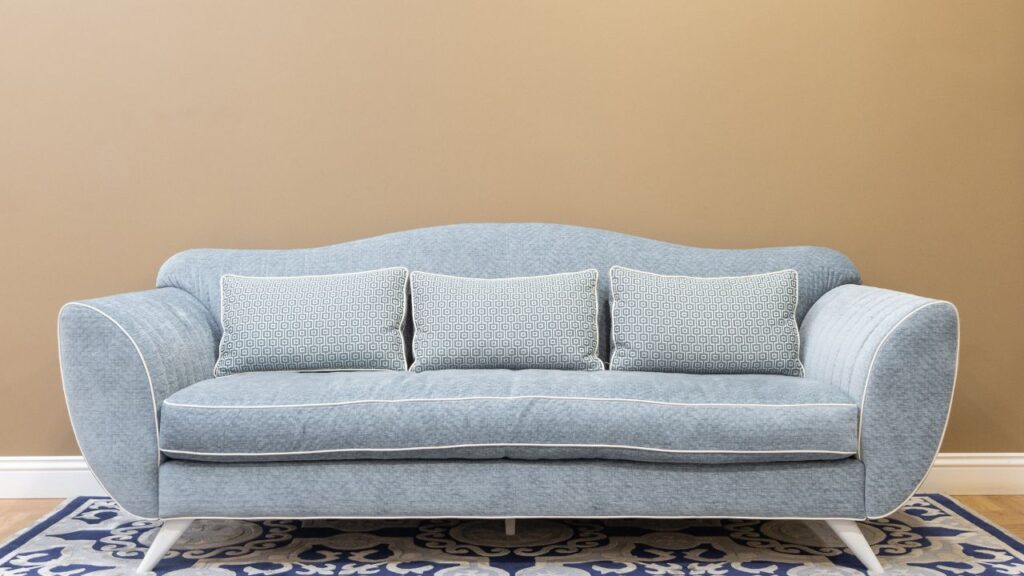
If you’ve ever googled how to choose cushions for your sofa size and style, you’re not alone – around the world, thousands of people search every month for help styling their sofa without wasting money on the wrong cushions.
Why Your Sofa Cushions Matter More Than You Think
Interior stylists agree that the right cushion combinations for a sofa can make a budget couch look high‑end and pull your whole room together. Studies of online furniture shoppers also show that product images with well‑styled sofa cushion styling tips get higher engagement and save rates, which is a strong signal that cushion choice really influences how “expensive” or “cozy” a space feels.
In simple terms: get the sofa cushion size guide, colours, and textures right, and your living room instantly looks more designed, even if nothing else changes.
Step 1: Nail the Right Cushion Size for Your Sofa
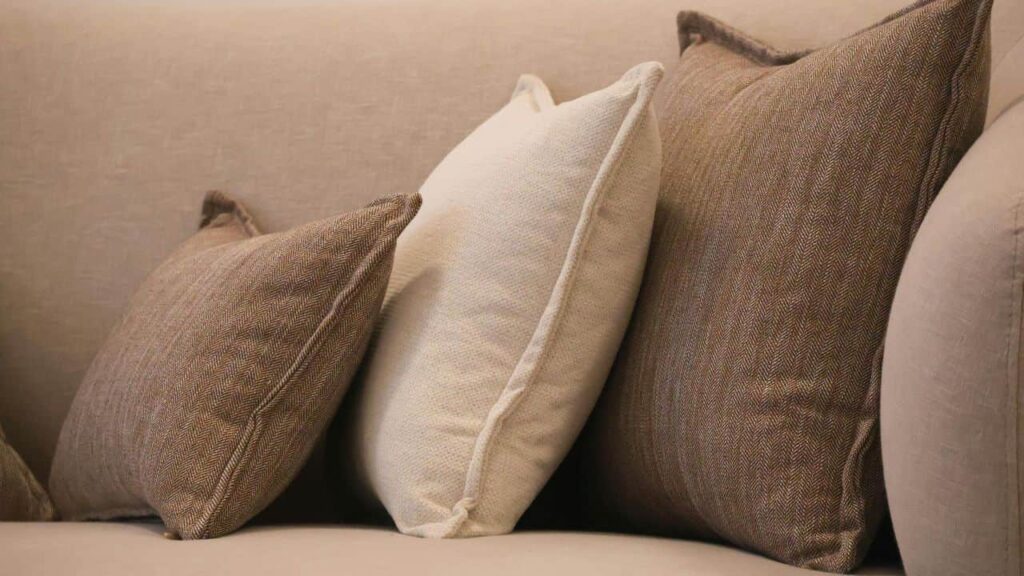
When you’re learning how to choose cushions for your sofa size and style, start with size before colour. The wrong size is the number one reason cushions look awkward, even when the pattern is perfect.
For a standard 3‑seater:
- Front cushions: 45 x 45 cm or 50 x 50 cm usually work best according to most standard sofa pillow size guide charts.
- Larger “anchor” cushions: 55 x 55 cm or 60 x 60 cm in the back, give that plush, designer look recommended by many sofa cushion buying guide articles.
- Rectangular lumbar: 30 x 50 cm or similar are great to break up all the squares and follow expert sofa cushion 101 advice.
If your sofa is small, follow “less but larger” rather than lots of tiny cushions; stylists note that 2–3 well‑sized cushions beat 6 small ones that just look messy. Corner and chaise sofas often suit a mix of 60 cm in the corner plus 50 cm and lumbar support along the arms, which you’ll see in almost every sofa cushion arrangement guide.
Step 2: Match Cushion Style to Sofa Shape and Room
Next, match the best cushion style for the sofa to the actual shape and feel of your couch.
- Modern, clean‑line sofa: Fewer, larger cushions, solid colours, and subtle patterns are what most sofa cushion styling tips recommend.
- Classic or traditional sofa: More layers and patterns, piped edges, and softer fills, as shown in many cushion combinations for sofa examples online.
- Deep, loungey sofa: Oversized, soft‑fill cushions that you can sink into, similar to what retailers show in their sofa cushions buying guide imagery.
Also, think about how you actually use the sofa. If it’s your main TV spot, choose cushions with durable fabrics and supportive sofa cushion filling types like high‑resilience foam cores with softer wrap, which testing shows hold shape longer than feather alone.
Step 3: Use the 60‑30‑10 Colour Rule
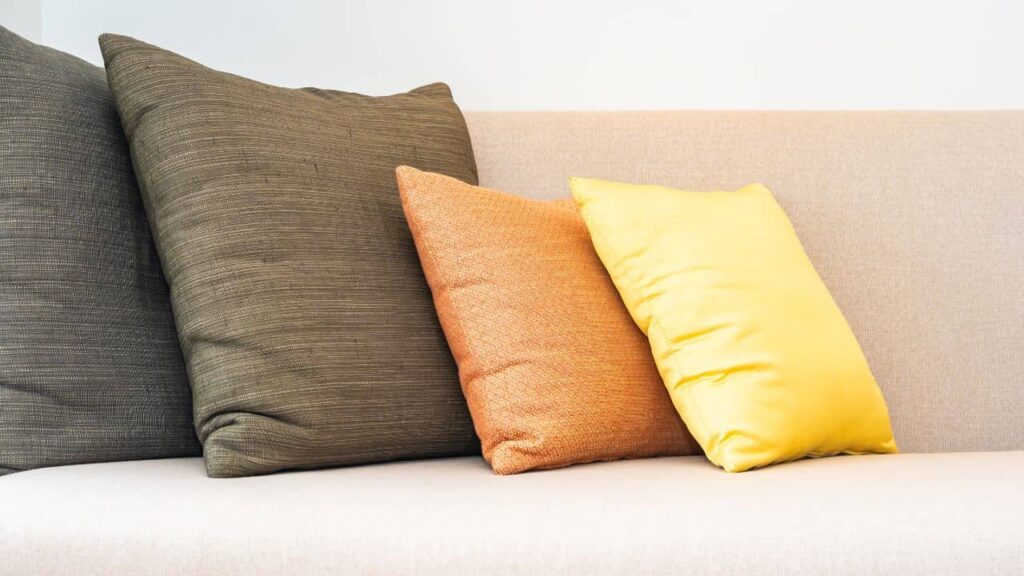
Colour is where most people freeze, so let’s keep it simple. Many interior designers use a 60‑30‑10 rule for matching cushions to sofa colour:
- 60%: Base colour from your sofa or wall
- 30%: Second colour from a rug, artwork, or curtains
- 10%: Bold accent that adds energy
If you’re wondering what colour cushions go with a grey sofa, this is where that internal link fits naturally: grey is your 60%, you might pull 30% from a navy rug, and use mustard or blush as the 10% accent pop.
For leather sofas, especially brown or tan, most how to match cushions to sofa guides recommend cool blues, soft greens, or warm neutrals to stop the sofa feeling heavy. For dark charcoal sofas, lighter neutrals and a bit of contrast pattern help the cushions stand out instead of disappearing.
Step 4: Follow Foolproof Layout Formulas
Once you know how many cushions for a sofa, the arrangement becomes easy. Stylists repeatedly use a few core formulas:
- 2‑seater: 2 or 3 cushions total, often one 50 cm plus a lumbar each side, which many how to arrange cushions on a sofa tutorials show as the simplest option.
- 3‑seater: 3 or 5 cushions; a common cushion layout for a corner sofa pattern is large at the ends, medium in front, and one feature cushion in the centre.
- Chaise / L‑shape: Cluster 3 cushions on the corner, then 1–2 on the short side and 1 lumbar on the chaise.
Most visual guides to how to style cushions on a couch also recommend mixing textures: linen, velvet, knit, or boucle, so the sofa doesn’t look flat in photos or real life.
Step 5: Choose the Right Cushion Filling
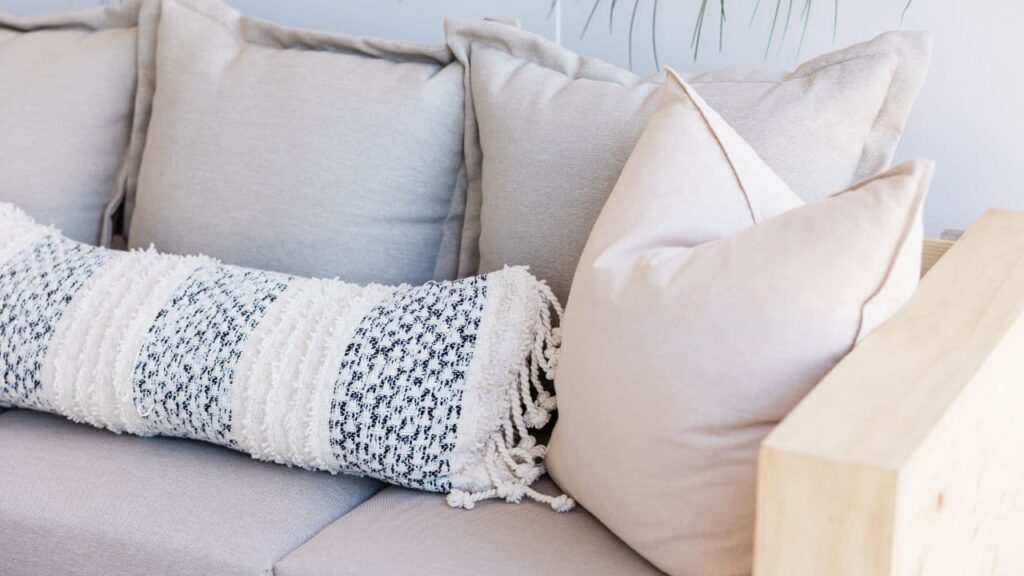
Even though you’re focused on how to choose cushions for your sofa size and style, filling still matters for comfort and shape.
According to recent sofa cushions buying guide data from major retailers, the most common and durable options are:
- Foam core with fibre or feather wrap: best balance of comfort and structure, and holds its shape in daily use longer than pure feather.
- Polyester fibre: affordable and light, good for decorative cushions you lean on more than sit on.
- Feather / down: luxurious feel but needs daily plumping; many sofa cushion 101 guides warn they can look saggy on busy family sofas.
If your sofa already feels very soft, slightly firmer cushion inserts can help you sit more comfortably and keep the styling crisp.
FAQs: How to Choose Cushions for Your Sofa Size and Style
How many cushions should I put on a sofa?
Most experts suggest 2–3 cushions for a 2‑seater and 3–5 for a 3‑seater, depending on how much you actually sit there and whether you like a minimal or layered look.
What size cushions are best for a 3‑seater sofa?
Common advice from sofa cushion size guide charts is 50 x 50 cm as your main size, with a couple of larger 55–60 cm cushions at the back and smaller lumbar cushions in front for depth.
How do I match cushion colours to my sofa?
Start from your sofa and one other item in the room (like a rug), then follow the 60‑30‑10 rule most designers use in how to choose cushions guides: 60% base, 30% supporting colour, 10% accent.
Should sofa cushions match the curtains?
They don’t have to match exactly. Many sofa cushion styling tips suggest repeating at least one colour or texture from your curtains so the room feels connected without looking too “matchy”.
Now that you know how to choose cushions for your sofa size and style, what’s the one thing you struggle with most: size, colour, or how many to use?

