
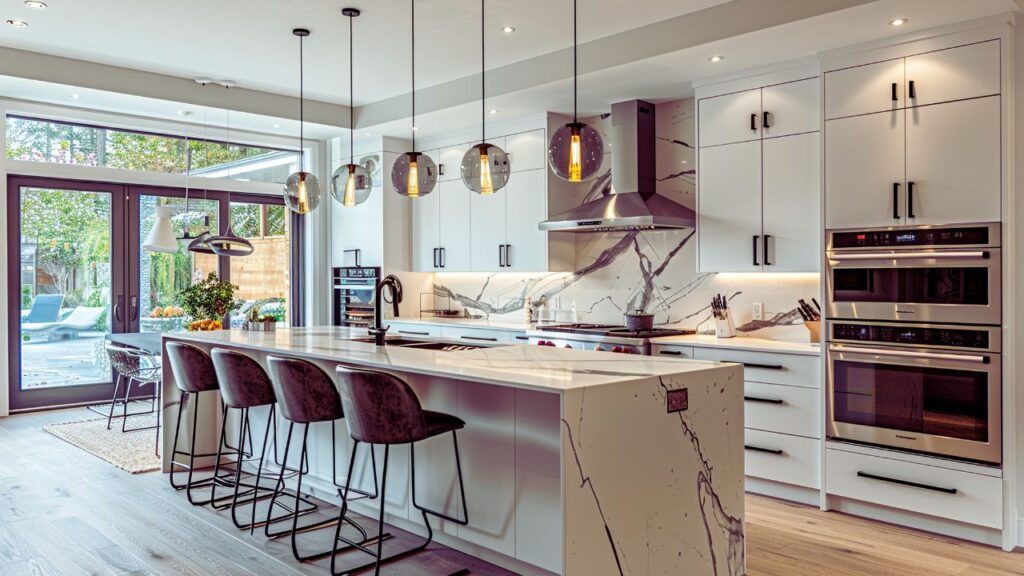
Your kitchen works harder than any other room in your home, yet most people never follow a proper kitchen lighting guide when planning it. According to lighting designers, over 60% of kitchens are under-lit, relying on a single overhead fixture that creates harsh shadows right where you need to see most. If you have ever chopped vegetables in your own shadow, you know exactly what I mean.
Good kitchen lighting is not just about brightness. It is about planning the right light in the right place. Let me walk you through exactly how to do that.
Why Kitchen Lighting Matters More Than You Think
The kitchen is where you cook, eat, work, and sometimes even have your best conversations. Bad lighting in this room creates eye strain, makes food look unappetizing, and turns the whole space into a safety hazard.
The fix is not buying one expensive fixture. It is using ambient, task, and accent lighting for your kitchen together, the same layered approach that works brilliantly in other spaces. If you have already read our guide on living room lighting ideas with layered light, you will recognize this framework immediately.
The 3 Layers Every Kitchen Needs
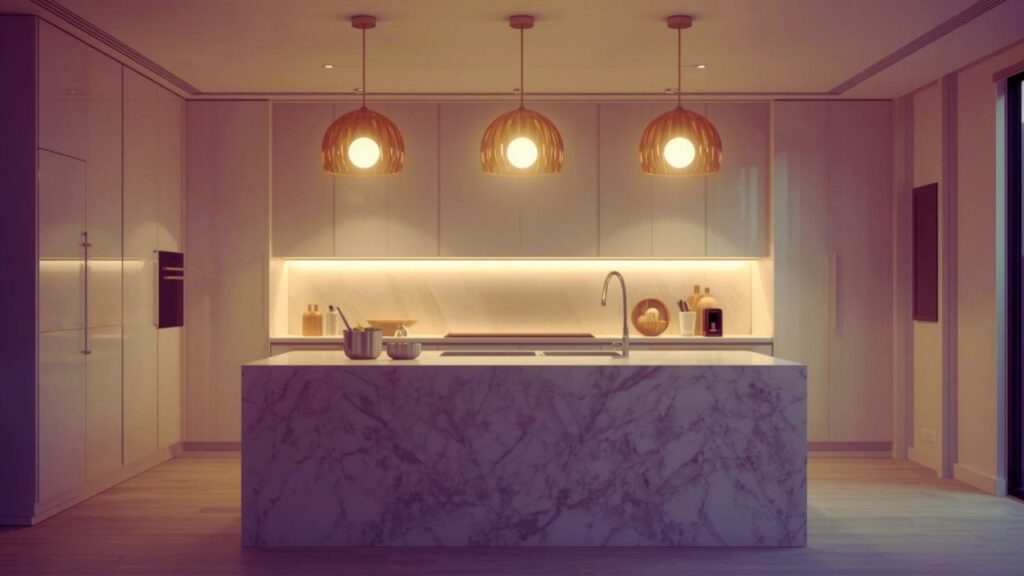
Layer 1: Ambient Lighting
Ambient lighting is your base layer. It fills the entire room with general light. Recessed ceiling lights, flush mount fixtures, or a central pendant all work well here. For a kitchen, aim for around 30 to 40 lumens per square foot. A 150 sq. ft. kitchen needs roughly 4,500 to 6,000 lumens total. Always use warm white bulbs between 2700K and 3000K for a welcoming, natural feel.
Layer 2: Task Lighting
This is where most kitchens fail. Task lighting is focused light placed directly where you work. The countertop, the sink, and the stove all need their own dedicated light source. Under-cabinet kitchen lighting is the single most effective task lighting upgrade you can make. It eliminates shadows on your countertop and makes cooking noticeably safer and easier
Layer 3: Accent Lighting
Accent lighting adds personality and depth. Think kitchen backsplash accent lighting, lights inside glass cabinets, or a warm glow beneath an island. Accent lights should be roughly three times brighter than your ambient layer to create proper contrast. They are not essential, but they take a kitchen from functional to genuinely beautiful.
Best Kitchen Lighting Ideas You Can Use Now
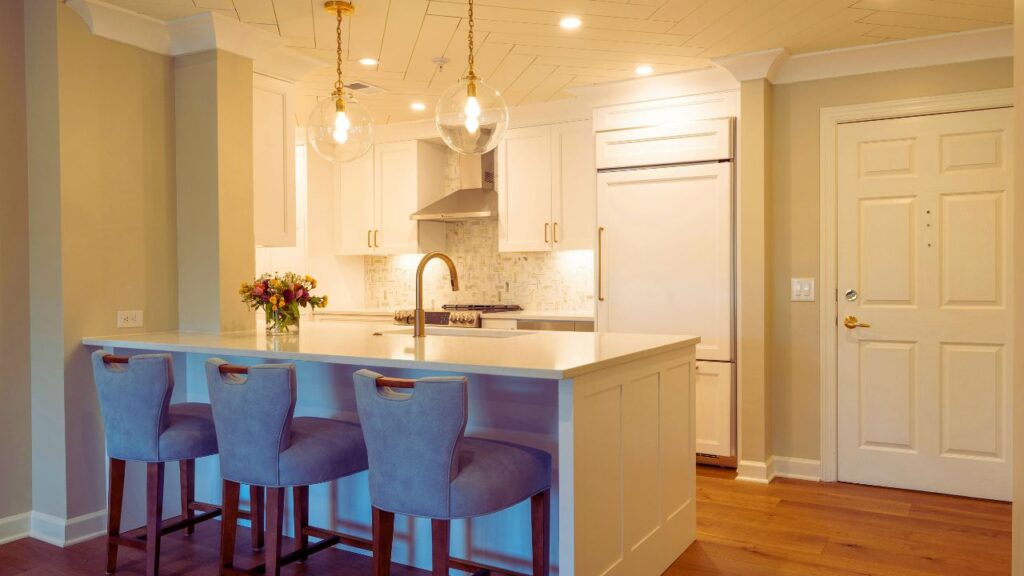
Kitchen Island Pendant Lighting
Kitchen island pendant lighting ideas are among the most searched topics in home design for a reason. Pendants above an island anchor the space visually and provide both ambient and task light at the same time. Hang them 30 to 36 inches above the countertop surface for the ideal height.
Recessed Lighting Layout for Kitchens
A good recessed lighting layout for your kitchen follows a simple rule: place downlights roughly 2 feet from the wall and space them 4 feet apart across the ceiling. This avoids dark pockets and distributes light evenly. Always pair recessed lights with dimmable LED lights for your kitchen so you can shift the mood from bright and energizing in the morning to soft and relaxed in the evening.
Lighting Ideas for Small Kitchens and Low Ceilings
If you are working with a compact space, small kitchen lighting ideas with no island, focus on maximizing vertical light. Use slim flush mount ceiling lights, add under cabinet strips, and consider kitchen lighting ideas for low ceilings, like surface-mounted panels or track lighting that does not drop down into your headspace.
Open Plan Kitchen Living Room Lighting
Open plan kitchen living room lighting ideas require one extra step. Both zones need to feel connected but distinct. Use a warmer tone in the living area and slightly cooler, brighter light over the kitchen work zones. A dimmer switch on each zone gives you full flexibility.
Frequently Asked Questions
Q: What is the best color temperature for kitchen lighting?
The best color temperature for kitchen lighting is between 2700K and 3000K for ambient light. For task areas like countertops, 3000K to 4000K gives you a crisper, cleaner light that makes food prep easier and safer.
Q: How many lumens do I need for a kitchen?
For general kitchen lighting, plan for 30 to 40 lumens per square foot. Task areas like countertops need around 50 lumens per square foot. Always spread these lumens across multiple fixtures rather than one single overhead light.
Q: What type of lighting is best under kitchen cabinets?
LED strip lights or puck lights are the best options for under-cabinet kitchen lighting. LED strips provide even, continuous light across the full counter length. They are energy-efficient, run cool, and are easy to install yourself.
Q: Should kitchen lights be warm or cool?
It depends on the zone. Use warm white (2700K to 3000K) for ambient and accent lighting to keep the space inviting. Use neutral white (3000K to 4000K) for task lighting over countertops and the sink where clarity matters most.
Q: How do I light a kitchen with no natural light?
In a kitchen with no windows, layer your sources generously. Use recessed ambient lights on a dimmer, add under-cabinet task lighting, and include accent lights inside cabinets or along the toe kick. Stick to warm white tones to avoid a clinical feel.

